Sunday, September 15, 2024


INTRODUCTION: The book of Micah declares the Ruler of Israel is eternal and will bring us into his light. The book of Micah declares that there is no one comparable to God because he pardons iniquity, delights in steadfast love, and is unchangeably faithful.

Micah means “who is like Jehovah” or His name means “who is like Yahweh?”

Micah came from the town of Moresheth, located in the foothills of Judah, approximately 25 miles SW of Jerusalem on the border of Judah and Philistia, near Gath.

The book of Micah is to encourage believers to remember that we have received great blessings from the Lord and in return we should live righteously and humbly before Him.

I)             Great Expectations – Micah 6:6-8

God Expects His People to Live Righteous Lives after receiving His blessing.

“He has told you, O man, what is good; And what does the Lord require of you But to do justice, to love kindness, And to walk humbly with your God?” Micah 6:8 (NASB)

1.  What is Good?

A. To be like Jehovah – Spiritual Character – Micah 1:1

 “The word of the Lord that came to Micah of Moresheth during the reigns of Jotham, Ahaz and Hezekiah, kings of Judah—the vision he saw concerning Samaria and Jerusalem.”

 “Hear, you peoples, all of you, listen, earth and all who live in it, that the   Sovereign Lord may bear witness against you, the Lord from his holy temple.”

 B. To do what Jehovah requires of us – Scriptural Principles – Micah 6:8

Vs. 7 Will the Lord be pleased with thousands of rams, with ten thousand rivers of olive oil? Shall I offer my firstborn for my transgression, the fruit of my body for the sin of my soul? 8 He has shown you, O mortal, what is good. And what does the Lord require of you?  To act justly and to love mercy and to walk humbly with your God.  (NASB)

C. To do justly – Sincere Uprightness – Micah 6:8

God continues to speak to His people about what we are to do in the face of injustice, exploitation, racism and mistreatment of certain populations. The response of God to Micah is His response to us when we ask what is required of us.

Do justice. Justice is defined as the quality of being just. It is righteousness, equitableness, and moral rightness. To be just is a call to action—not to be silent or complacent when others, especially the most vulnerable, are abused, mistreated, in need, scorned or exploited.  In other words,  holding our community to God's standard.

The Hebrew word sometimes translated as “just” is tsedaqah, which expresses the idea of honesty, justness, and community loyalty. To be biblically righteous is to be biblically just and vice versa.

D. To love mercy – Sympathetic Manners – Micah 6:8

To love mercy is to show “hesed,” covenant faithfulness to one another. Micah 7:18 says God delights to show covenant faithfulness. It’s who He is. Only because He has shown us great mercy can we do the same for others.

As Saint Thomas Aquinas said, “Justice and mercy are so united that the one ought to be mingled with the other; justice without mercy is cruelty; mercy without justice is profusion.”

We should practice justice mercifully. We should practice mercy justly. When we see need, pain, loss, discrimination, bias, fear, or wrongdoing we should respond with mercy, as God has shown us mercy.

E. To walk humbly with our God – Saintly Communion – Micah 6:8

We humbly ask the Lord to help us, empower us, lead us, equip us. It will never be easy, especially on the road to reconciliation but it is the road God calls us to walk.

Therefore, Micah 6:8 is a call to listen to God, to do justice from hearts of mercy and compassion, marked by the humility of Christ.

It affirms graciousness, civility, respect, submission to biblical instructions among other traits—all of which are manifestations of lives shaped by walking with humility before God.

May God bless you greatly as you serve Him daily.

Friday, August 30, 2024


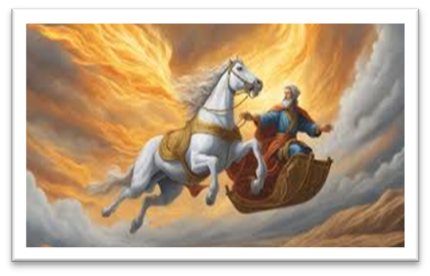
THE MINISTRY OF ELIJAH  -  James 5:17; 1 Kings 17

1)   ELIJAH’S EARLY LIFE AND UPBRINGING

He is described as Elijah the Tishbite, from Tishbe in Gilead, and as his name means “God is my strength”, this may indicate that he had godly parents. We can be sure, however, that God had been preparing him all through his early years. Elijah was the man God chose for those critical times.

2)   ELIJAH LIVED IN A DAY OF SPIRITUAL DECLENSION AND APOSTASY

A succession of seven wicked kings had reigned over Israel: (1) Jeroboam (1 Kings 12:28-33); (2) Nadab (15:25-26); (3) Baasha (15:27-28); (4) Elah, a drunkard and a murderer (16:8-9); (5) Zimri, guilty of treason (16:20); (6) Omri (16:25-26); and (7) Ahab (16:28-33), with whom must be linked his notoriously wicked wife Jezebel.

Worship of the true God had all but ceased; Baal-worship had become the national religion. Only 7000 Israelites remained true in heart to the Lord, and these were fearful and had hidden their testimony (1 Kings 19:18). A floodtide of idolatry, superstition and evil had overwhelmed the nation; never had God’s favoured nation sunk so low spiritually and morally.

3)   ELIJAH WAS A MAN JUST LIKE OURSELVES

We tend to regard men like Elijah, Moses, Daniel and the other O.T. ‘heroes’ as men who walked on heights inaccessible to us. But who was Elijah? James 5:17 tells us: a man with a nature just like yours and mine. A man not an angel - a man who at one point failed badly. A great man but no different from ourselves. Elijah is just an ordinary man like us.

  1. A Man of Passion – James 5:17
  2. A Man of Prayer – 1 Kings 17:20; James 5:17
  3. A Man of Power – 2 Kings 2:14,15
  4. A Man of Patience – 1 Kings 17:5-7
  5. A Man Protected by God – 1 Kings 18:10

Friday, August 16, 2024


The Life and Ministry of Hosea 

Hosea is a prophet whom God uses to portray a message of repentance to God's people. Through Hosea's marriage to Gomer, God shows his great love for his great people, comparing himself to a husband whose wife has committed adultery, using this image as a metaphor for the covenant between God and Israel.

God has a future for us, a plan for us - a plan to bless us in his Son, represented by the prophet Hosea, whose very name means salvation. God’s plan is to bring us home and transform us from rebels and sinners to saints. That is why God sent his Son Jesus Christ and that is what the Christmas season is all about: God sent his Son to seek us and redeem us from the marketplace of slavery.

God has a plan to forgive all your sins. God has a plan to heal you and to love and bless you freely. That plan is found in this fourteenth chapter of the book of Hosea. It is God’s plan –his only plan to save humanity through his Gracious Love.

God loves you because He loves you, because He loves you (100 times).  His love for you is perfect 100%.  He loves you all the way all the time.  God never stops loving you.

A)   WORDS OF CONFESSION TO GOD

Take with you: -

1.   Words of Repentance – “Take away all iniquity” – Hosea14:2

2.   Words of Faith – “In Thee the fatherless find mercy” – Hosea 14:3

3.   Words of Entreaty – “Receive us graciously” – Hosea 14:2

4.   Words of Praise – “we will offer the sacrifices of our lips” – Hosea 14:2  

B)   GOD’S WORDS OF PROMISES – “I WILL” three times

1.   The Goodness of God’s Activity -  “I will heal their backsliding” – Hos. 14:4

2.   The Graciousness of God’s Attitude – “I will love them freely” – Hos. 14:4

3.   The Gentleness of God’s Approach – “I will be as the dew to Israel – Hos. 14:5 

1.   Here is a promise we can bank on, count on, depend on, trust in and believe on: “I will heal their waywardness.”

We find the same promise in Jeremiah 3:22: “Return, faithless people; I will cure you of backsliding.” God promises to forgive all our sins and cure our perversity, to make us lovers of God and seekers after righteousness.

2.   “I will love them freely.”” The second blessing is God’s promise to love us freely. In Hosea 11:8-9 we see mention of God’s great love for his people: ”

What is the measurement of this great love of God? It is like an ocean we only dip our feet into the water on the beach. We have not discover the depths of His Rivers of Gracious Love.

3.   “I will be like the dew to Israel.” What do we need in the desert of this world? Water. Here God promises, “I will be like the dew to Israel.” Without water we wither and perish, but when God nourishes us, we will flourish. We will be like watered gardens fresh and flourishing.

In Deuteronomy 32:1-2 we read, “Listen, O heavens, and I will speak; hear, O earth, the words of my mouth. Let my teaching fall like rain and my words descend like dew, like showers on new grass, like abundant rain on tender plants.”

May the Lord bless you and His Goodness and Mercy follows you all the days of your life and family. Amen.


THE LIFE AND MINISTRY OF ZECHARIAH

Introduction:

 Zechariah invites us to look above the chaos and hope for God’s Kingdom to come, motivating faithfulness in the present moment. That’s the challenge Zechariah offers to all generations of God’s people.

THE CLEANSING OF JOSHUA – THE HIGH PRIEST

Our Text: Zechariah Chapter 3:1-7 – three persons were introduced here:

1.         Joshua the high priest – the Accused - Zech. 3:1

2.         Satan standing by – the Adversary   - Zech. 3:1

3.         The Lord Jehovah – the Advocate    -  Zech. 3:1,2

God gave Zechariah a vision of Joshua the High Priest.

A) Joshua was Chosen

“Then he showed me Joshua the high priest standing before the Angel of the LORD, and Satan standing at his right hand to oppose him. And the LORD said to Satan, “The LORD rebuke you, Satan! The LORD who has chosen Jerusalem rebuke you! Is this not a brand plucked from the fire?” Now Joshua was clothed with filthy garments, and was standing before the Angel”.  NASB

B) Joshua was Accuse

1.  In his vision, Zechariah saw the high priest in the presence of the LORD (standing before the Angel of the LORD), and he was clothed with filthy garments.

2. Satan standing at his right hand to oppose him: Satan hated the whole scene. He hates it when God’s people come into the presence of the LORD. He hates it when they come into God’s presence to serve and honour the LORD.

“Satan must have been pointing to those [filthy clothes] and declaring forcefully that Joshua was unfit to stand before the Lord in this office.” (Boice)

God does allow Satan to attack and harass His people, but He always strictly regulates what Satan is allowed to do.

Application: When the devil accuses you and condemn you - point him to Jesus your Advocate and He will stand for you to protect you.

C) Joshua’s Iniquity was Cleanse and he is given clean garments. Vs. 4,5

“Then He answered and spoke to those who stood before Him, saying, “Take away the filthy garments from him.” And to him He said, “See, I have removed your iniquity from you, and I will clothe you with rich robes.” And I said, “Let them put a clean turban on his head.” So they put a clean turban on his head, and they put the clothes on him. And the Angel of the LORD stood by.” NASB

This verse is rich with meaning that speaks to the themes of forgiveness, redemption, and the righteousness offered by God. The imagery of filthy garments being removed and replaced with clean clothes conveys the idea of a spiritual transformation and a restoration of righteousness. (Enduring Word)

D) Joshua was Clothed and Crowned

And I said, “Let them put a clean turban on his head.” So they put a clean turban on his head”

The glory and complement of the high priest's sacrificial attire was the mitre with the "holy crown upon it and the plate of prate gold, on which was graven, Holiness to the Lord" Exodus 28:36-38; Exodus 29:6; which was to "be upon" the high priest's "forehead, that he may bear the iniquity of the holy things which the children of Israel shall hallow in all their holy gifts; which was always to be upon his forehead, that they may be accepted before the Lord." NASB

E) Joshua was Commissioned - Zech. 3:7

A personal admonishment and promise to Joshua.

Then the Angel of the LORD admonished Joshua, saying, “Thus says the LORD of hosts:

‘If you will walk in My ways, And if you will keep My command, Then you shall also judge My house, And likewise have charge of My courts; I will give you places to walk among these who stand here.” NASB

God is talking to the church today! We need to walk in His ways and keep His command and we will have spiritual authority in the house of God to minister to others.

F) Joshua was Commanded – “I will give thee places to walk” – Zech. 3:7

 1. Joshua, in Zechariah’s day, was encouraged much the same way that the first Joshua was admonished. Only be strong and very courageous, that you may observe to do according to all the law which Moses My servant commanded you; do not turn from it to the right hand or to the left, that you may prosper wherever you go. (Joshua 1:7)

Application: God will prosper us when we are strong to believe in Him and observe to do according to the Word of God. Spiritual authority will be access to us all.

2. Then you shall also judge My house, and likewise have charge of My courts: God promised Joshua that he would indeed continue to serve as high priest as he was diligent to stay obedient to God.

3. I will give you places to walk among these who stand here: God promised Joshua privileged access into the presence of God. This wasn’t a surprising promise for a high priest, but we have the same promise in New Testament.

Application: Let us therefore come boldly to the throne of grace that we may obtain mercy and find grace to help in time of need. (Hebrews 4:16) NKJV

Conclusion:

Here Joshua was Rescued from the fire and Restored to his office as a Priest and Recognized by the people as a sign.

Joshua the high priest was:

1. Chosen – a brand plucked out of the fire – Zech. 3:2

2. Cleansed – “I have caused thine iniquity to pass,”  - Zech. 3:4

3. Clothed –they clothed him with garments – Zech. 3:5

4. Crowned – they set a fair mitre (turban) upon his head.  -  Zech. 3:5

5. Conditioned – “if thou wilt walk in my ways.” - Zech. 3:7

6. Commissioned – “thou shalt judge and keep” – Zech. 3:7

7. Commanded to – “I will give thee places to walk”  – Zech. 3:7

Challenge:

As we come to Jesus to be cleansed of our iniquity and save us.  Let Him clothed us with rich garments of holiness and righteousness. Let Jesus crown us with spiritual authority as a priest for the Lord. Let us walk in His presence always and keep His Word in our hearts.Come with sincere faith and looking for a spiritual transformation and revival for the Church of Jesus Christ.  

Tuesday, July 9, 2024


REDEEMING THE TIME

Eph. 5:16 says “redeem the time, because the days are evil.”

How we handle our time is important indeed. John Lubbock stated that “Time, indeed is a sacred gift and each day is a little life”. Time is a gift from God, it is life, and if I waste time I am wasting life.  As Benjamin Franklin put it “Lost time is never found again.”

The Amplified translation of Eph. 5:16 says “Make the most of our time – buying up each opportunity – because the days are evil”.

One of your greatest dangers in life is letting the urgent things crowd out the important things. Take time to do those important things and take time to enjoy life. Remember, life is not a dress rehearsal, it is the real thing. The following choices need to be made constantly.

Take time to laugh – it is the music of the soul.

Take time to think – it is the source of power.

Take time to play – it is the source of perpetual youth.

Take time to read – it is the fountain of wisdom.

Take time to pray – it is the greatest power on earth.

Take time to love and be loved – it is a God-given privilege.

Take time to be friendly – it is the road to happiness.

Take time to give – it is too short a day to be selfish.

Take time to work – it is the price of success.

Value the importance of this moment. Enjoy totally the gift of the day and all that God has for you.  Do not waste time, for time is the raw material of life. 

By Gerald H. Bradley – from the book “Powerful Inspirational Motivation”  


Friday, July 5, 2024

THE SINLESS LIFE


The Sinless Life (1 John 3:6)   Posted on October 27, 2016 by Paul Ellis

When the Holy Spirit came into your life the change in you was like night and day. Its like you were given a heart transplant. Your old heart, which was captive to desires of the flesh and enslaved to sin, was replaced with a new heart with new desires and appetites. Your new heart beats with new passions and they are the passions of the Holy Spirit. This is why John can say outlandish things like this:

No one who lives in him keeps on sinning. No one who continues to sin has either seen him or known him. (1 John 3:6

Before I understood what was new about me, I used to look at verses like this sideways. No one keeps on sinning?!  John, have you lost touch with reality?

In a manner of speaking I think this is exactly what happened. John understood that there is no comparison between the life we had in Adam and the new life we have in Christ. Sinning is characteristic of Adams nature, not Christs.  For us, sinning is a part of that old reality that died with Christ on the cross. It does not describe our new reality in Christ.

But Paul, are you saying we wont ever sin? Now youre starting to sound like youve lost touch with reality. Maybe I have. Maybe I have traded the flawed and false reality of my old life for the better and truer reality of his.

 A promise, not a threat

So what is John talking about when he says no one who lives in him keeps on sinning? There are two ways to read this. Someone schooled in the sticks and carrots of the old covenant will interpret these words as a threat. If you want to remain in him and stay saved, you had better stop sinning. Dont be deceived. God is holy and intolerant of sin. Slip up and youre outta here! 

What an awful distortion of Gods unconditional love! Can you imagine being married to someone who threatened to kick you out every time you made a mistake? You would be an emotional wreck. You would walk on eggshells for fear of upsetting your hyper-sensitive and ungracious partner.

Come to think of it, this is exactly how many Christians live. Since they dont know what makes the new covenant new, they are filled with performance anxiety. They are ever fearful of enraging a temperamental God. 

Look to the cross! If God loved you enough to die for you when you were a sinner, he surely loves you now. He didnt stop loving you after you got saved and he will never kick you out. Your union with the Lord is not conditional on your behavior. In case we had forgotten this, John gives us a reminder:

Whoever confesses that Jesus is the Son of God, God abides in him, and he in God. (1 John 4:15, NKJV)

God abides, he dwells, He stays. The moment you acknowledged Jesus as Lord, he moved into your life and he will never leave.

Johns remarks about not sinning should not be read as a threat but promise. He is describing the new life that we have in Christ. Jesus didnt sin and he never will. If you let him live his life through you, then without any conscious effort on your part youre going to start talking and walking just like sinless Jesus. Its inevitable. Live with someone long enough and you begin to resemble that person in manner and thought. 

Sonful, not sinful

I am not saying your behavior will attain a level of sinless perfection this side of eternity. I am saying that living in fellowship with the sinless Son produces desires in us that are informed by his righteous nature. You are Sonful not sinful. This is how John explains it:

No one who is born of God will continue to sin, because Gods seed remains in him; he cannot go on sinning, because he has been born of God. (1 John 3:9)

 This is not about your performance but your pedigree. Look at the verse again. Three times John refers to your parentage; born of God, Gods seed, born of God. John is trying to tell us that while Adam breeds sinners, God does not. This comes out clearly in the Message Bible:

People conceived and brought into life by God dont make a practice of sin. How could they? Gods seed is deep within them, making them who they are. Its not in the nature of the God-begotten to practice and parade sin. (1 John 3:9, MSG)

Origin determines destination. In your old life you followed in the faithless footsteps of your father Adam. You walked after the desires of the flesh because they were the only desires you had.

But you have been taken out of Adam and placed into Christ. You have become a partaker of his divine nature. The evidence of this is the new desires and new ambitions you now have. As far as sinning goes, you are just not that interested anymore. Sure, you still have the capacity to sin. But you dont enjoy it like you used to. Sinning makes you miserable because you know who your Father is, and when you know who your Father is (not a sinner), then you know who you are (not a sinner).

In the next verse John adds, This is how we know who the children of God are (1 John 3:10).

  Who are the children of God?                                   

It is those who practice righteousness, not because they have to, but because they carry the righteous DNA of their righteous Father. You dont practice righteousness to become righteous but because you are righteous. You are a righteous branch on a righteous vine doing what comes naturally.

Extracted from The Gospel in Ten Words.


Tuesday, July 2, 2024


THE LIFE AND MINISTRY OF ANNA - Text: Luke 2:36-38

 “And there was a prophetess, Anna, the daughter of Phanuel, of the tribe of Asher. She was advanced in years, having lived with her husband seven years from when she was a virgin, and then as a widow until she was eighty-four. She did not depart from the temple, worshiping with fasting and prayer night and day. And coming up at that very hour she began to give thanks to God and to speak of him to all who were waiting for the redemption of Jerusalem.” (Luke 2:36–38) 

The story of Anna is contained only three small verses of the Scripture, but contained in this brief account of her life are several significant principles to guide us in becoming a more effective witness for Christ.

From these three verses in Luke, the following is known of Anna:

She was a prophetess. She was a daughter of Phanuel. She was a member of the tribe of Asher. She was widowed after seven years of marriage (her husband is not named). She was a devout Asherite Hebrew who regularly practiced prayer and fasting. Luke describes Anna as "very old“ and she was 84 years old.

I. Anna Practice Holiness

a. The first lesson revealed in the text is that Anna practiced a life of purity. The text says she was a prophetess, she fasted and prayed, and she never left the temple. The KJV contains an additional phrase, "she lived with her husband seven years from her virginity." All these references reveal that Anna lived a separated or holy life.

The apostle Paul wrote to Timothy instructing him, "If a man cleanses himself he will be a vessel of honour, made holy, useful to the master and prepared for every good work." (2 Tim. 2: 21,22).  NIV

This psalm teaches us what it means to stand in holy places. “Who shall ascend into the hill of the Lord? Or who shall stand in his holy place? He that hath clean hands, and a pure heart; who hath not lifted up his soul unto vanity, nor sworn deceitfully.” – Psalms 24:3, 4  KJV

Our Psalmist says as we are worshipping God we stand in holiness. We need to have clean hands a pure heart and not living in vanity and deceitfully lifestyle.

II. Anna Pray Consistently

a. The biographical account of Anna reveals that she was a prayer warrior who prayed night and day. When God chose a handful of believers who testified at His Son's birth, God chose someone who prayed. Through prayer she gained an insight that many failed to grasp.

b. Anna’s Prayer and Fasting: She did not depart from the temple, worshiping with fasting and prayer night and day.  Jesus gave His disciples authority to cast out demons but one day they came upon a possessed man and they could not make the demons leave. Perplexed they asked their master what was wrong and He told them that “this kind” only comes out through prayer and fasting.

Anna. Instead of turning her ministry over to the younger generation, Anna was like the righteous people described in Psalm 92:14, who “still bear fruit in old age; are ever full of sap and green.” (fruits are fresh and flourishing)

c. Anna prayed and God used her to tell others about Christ. We should follow her example. The Scripture says she spoke to all who were looking for redemption (v.38). II am convinced that she told people for whom she had been praying.

III. Anna Persevere Patiently

Anna’s example also invites us to pray for the Lord’s appearing, not as a baby this time but as the triumphant King. In the discouragement of exile, we need to fix our eyes on Jesus—looking expectantly for his work in the world now and for his final revelation one day soon. Like the saints of old, we keep praying, “Come, Lord Jesus!” (Rev. 22:20).

This Verse Leads Us to Ask the Lord to Come Quickly

In light of this scene, we pray it today over and over again in the rest of Revelation 22:1–5. Come, Lord Jesus, come quickly. We long for the day, when we will see your face, we will be with you, you as our light. And we will reign with you, Lord Jesus. Amen!

IV. What I've learned from Anna?

         She didn't give up. There have been times in our ministry that we                          could have given up.

        She did what God told her to do. Obedience

        She taught me about being strong.

        God provided for Anna.

        Fasting produces results.

        She was committed.

        She had a lot of courage.

        She was a strong witness for Christ. 

So be strong in the strength and might of the Lord Jesus Christ. God bless you all.